Excavator Quick Hitch Guide: Types, Safety and Used Checks
An excavator quick hitch is a latching device on the end of the dipper arm that lets the operator swap buckets and attachments in minutes instead of knocking pins out by hand. To pick the right one, match the hitch to your machine’s weight class and pin sizes, choose between manual and automatic types, and check that the manufacturer’s retaining pin or locking system is fitted and working every time an attachment is changed.
What an excavator quick hitch does
A quick hitch, also called a quick coupler, stays on the machine and grabs the attachment, so one operator can change tools during the day without knocking out the main pins. HSE describes them as saving a great deal of time when they are properly designed, maintained and used, and allowing excavators to run a wider range of tools than just buckets.
Many machines in the used mini excavators and used excavators on Plant And Tractor Trader list a quick hitch in their specification.
Types of excavator quick hitch
- Manual quick hitch: the operator locks the attachment by hand, usually with a screw, lever or pin, after picking it up. Simple, but the operator must leave the cab for each change.
- Hydraulic (automatic) quick hitch: a hydraulic ram locks the hitch onto the attachment from the cab, with a mechanical locking feature or safety pin as a back up. This is the most common type on newer machines.
- Semi-automatic quick hitch: engages part of the lock automatically but relies on a separate retaining pin. HSE confirmed that European manufacturers agreed to stop supplying these into the UK from 1 October 2008. They are not illegal and can still be used safely in line with the maker’s instructions, but you will mainly find them on older machines.
- Tilting hitches and tiltrotators: these add tilt, or tilt and full rotation, so a bucket can work at an angle. They need extra hydraulic services on the machine.
How to choose a quick hitch for your machine
- Weight class: buy a hitch made for your excavator’s operating weight range. The hitch’s own weight also reduces the load you can safely carry, so check the rated capacity.
- Pin diameter and centres: measure the pin diameter, the distance between pin centres and the dipper width, or get them from the maker. Attachments must match too.
- Hydraulic supply: a hydraulic hitch needs a suitable circuit and switch in the cab. If the machine has none, budget for having it plumbed in.
- Attachments you plan to run: buckets, breakers, augers and grabs all put different loads on the hitch. Our guides to excavator buckets and hydraulic breakers cover those tools in more detail.
- Safety system: look for a clear locking indicator the operator can see from the seat, and a hitch that keeps hold of the attachment if hydraulic pressure is lost.
Quick hitch safety: what HSE says
HSE issued a safety alert on quick hitches after a run of serious incidents, including four deaths between December 2006 and November 2007. The common factor was a missing retaining pin or bar. A hitch can keep working for a while without its pin and then release the attachment without warning.
HSE’s guidance says operators should be trained on quick hitches and competent with the specific hitch on their machine, the manufacturer-specified retaining pin must be on the machine, and there should be a system for checking the pin is in place before starting work and every time an attachment is changed. Pins should never be replaced with bolts, wire or other substitutes, and nobody should work below the bucket.
Quick hitches also fall under the Lifting Operations and Lifting Equipment Regulations 1998 (LOLER). HSE says a hitch permanently on the machine needs a thorough examination by a competent person every 12 months, or at an interval the competent person sets, while a hitch that is not permanently attached is treated as a lifting accessory with six monthly checks. Read the full HSE guidance on quick hitches before you put a machine to work.
Checking a quick hitch on a used excavator
- Ask for the latest thorough examination report and the hitch’s make, model and safe working load plate.
- Check the retaining pin or locking device is present, is the maker’s own part and is not bent or worn.
- Cycle a hydraulic hitch open and closed from the cab and watch for slow movement, leaks from the ram or hoses, and a working warning buzzer or light if one is fitted.
- Look for cracked welds, worn hooks and slack in the pin bosses. Movement between the attachment and the hitch points to wear.
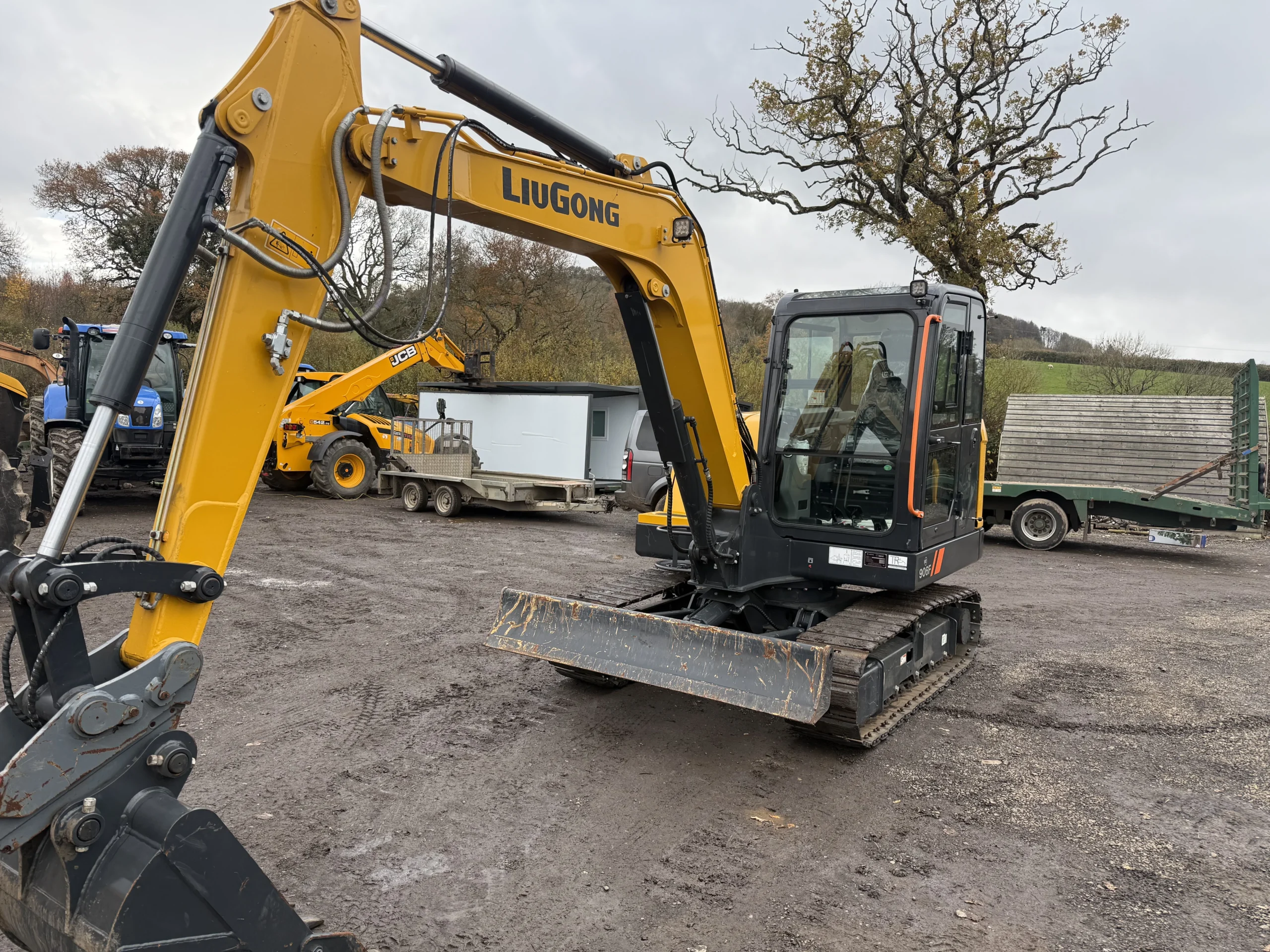
Examples currently listed include a LiuGong 906F Max Plus 6 ton digger with a hydraulic quick hitch and three buckets, a Kubota KX027 and a Volvo ECR50D with hydraulic quick hitches, a Hitachi ZX48U with a manual quick hitch, and a 2022 JCB 220X L with a hydraulic quick coupler. You can also browse attachments and rock breakers.
Cannot find the right machine? Set up stock alerts.
Selling excavators or attachments?
Dealers can list all their stock on our unlimited listings plan for £100 + VAT a month, or you can book a single 8-week listing for £150 + VAT. If your business needs a website that shows your stock properly, our dealer websites start from £750 + VAT, with hosting free for the first year and £225 + VAT a year from year two.
Frequently asked questions
Is a hydraulic or manual quick hitch better?
A hydraulic quick hitch is faster because the operator changes attachments from the cab,. A manual hitch is simpler and has fewer parts to go wrong, but the operator has to get out to lock each attachment.
Are semi-automatic quick hitches illegal?
No. Manufacturers agreed to stop supplying them into the UK from 1 October 2008, but HSE says they can still be used safely when used in line with the maker’s instructions, with the retaining pin fitted every time.
How often does a quick hitch need inspecting?
Under LOLER, HSE says a hitch permanently fitted to the machine needs a thorough examination every 12 months or at an interval set by a competent person. A hitch that is not permanently attached counts as a lifting accessory and needs checking every six months.
Talk to Plant And Tractor Trader
Looking for a digger with a quick hitch, or want your plant and attachments in front of UK and Irish buyers? Message us on WhatsApp on 07470 093663 and we will help you find it or get it listed.