Excavator Buckets: Types, Sizes and How to Choose the Right One
The right excavator buckets for your machine depend on three things: the job, the size of the machine and how the bucket fits. A general digging bucket covers most work, a ditching or grading bucket handles finishing and landscaping, and a rock bucket takes the punishment in hard ground. Before you buy, match the bucket to the machine’s weight class, then check the pin diameter, the pin centres and the ear width (or the quick hitch) so it actually fits.
The main types of excavator buckets
Most owners end up with two or three buckets for different jobs. These are the types you will see most often:
- General purpose digging bucket. The everyday bucket, with teeth for breaking into ground and a shape that holds a good load. Ideal for general excavation in mixed soil.
- Trenching or foundation bucket. A narrow digging bucket for service trenches, drainage runs and footings, where you want a neat trench without extra spoil.
- Ditching or grading bucket. Wide and shallow with a straight cutting edge and no teeth. Used for ditching, levelling and finishing ground.
- Tilt bucket. A grading bucket that tilts left and right, so you can cut banks, slopes and drainage falls without constantly repositioning the machine.
- Rock bucket. Heavier plate, reinforced sides and strong teeth for quarry work, demolition rubble and hard or stony ground.
- Riddle or skeleton bucket. Has gaps between the bars so soil falls through and stones, roots or rubble stay in the bucket. Useful for screening topsoil on site.
Excavator bucket sizes explained
Buckets are usually described by the machine class they suit and their width. A listing might read “20 ton 24 inch digging bucket” or “5 ton 5ft grading bucket”. The tonnage tells you the weight of excavator it is built for, and the width is measured across the cutting edge, in inches, feet or millimetres.
Width matters more than people think. A bucket that is too wide for the machine will be slow and heavy, and can strain the boom and hydraulics. A bucket that is too narrow digs quickly but moves less material on each pass. The operator’s manual or manufacturer will list recommended bucket sizes and the maximum bucket weight.
Making sure the bucket fits your machine
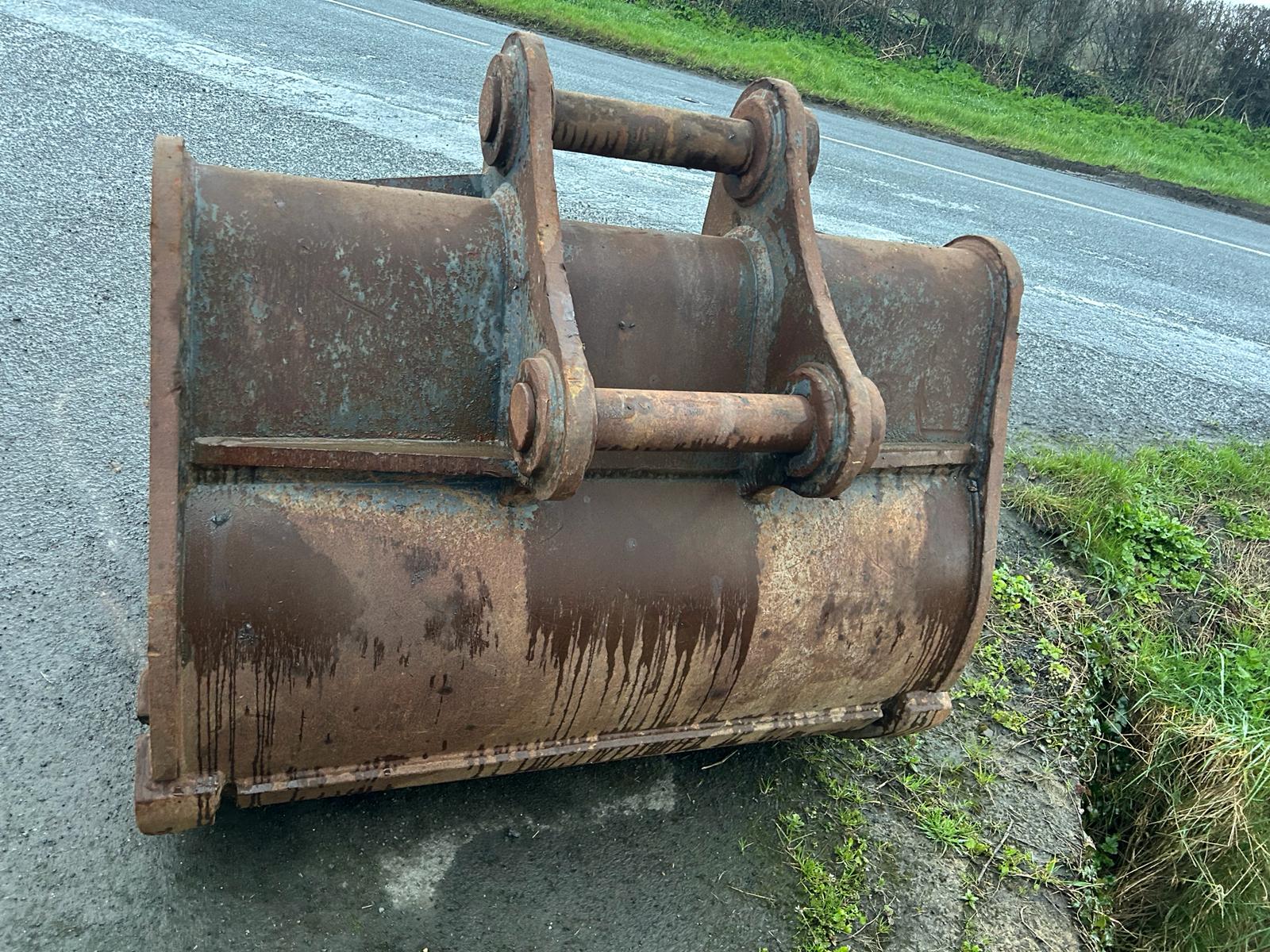
A bucket only works if it fits. If you are swapping straight onto the dipper with pins, check these measurements against your machine:
- Pin diameter. The thickness of the pins that hold the bucket on. Many listings state it, such as a bucket “with 80mm pins”.
- Pin centres. The distance between the centre of the two pins.
- Ear width or dipper width. The gap between the mounting ears on the bucket, which has to match the end of your dipper arm.
If your machine runs a quick hitch, the bucket also has to suit that hitch. Hitch makes and styles vary, so confirm the bucket has been used on the same hitch type, or that the pins can be set up to suit. If unsure, send the seller your measurements or photos of the mounting first.
What to check on a used bucket
Buying used is a sensible way to build up a set of buckets for less than new. When you inspect one, check:
- Cutting edge and teeth. Worn teeth and adaptors are normal wear parts and can be replaced, but a badly worn or cracked cutting edge is a bigger job.
- Cracks and welds. Look closely around the ears, the hinge points and the corners. Old repairs are fine if they are done well, but fresh cracks need attention.
- Bushes and pin bores. Oval or worn bores mean play, knocking and extra wear on your pins and dipper.
- Wear plates and the base. Thin or holed plate on the underside means the bucket has had heavy use.
- Bent ears or sides. These can stop the bucket lining up with your pins or hitch.
Used excavator buckets for sale on Plant And Tractor Trader
You can browse used buckets for sale on Plant And Tractor Trader, with examples such as a 20 ton 54 inch rock digging bucket, a Strickland 20 ton 1500mm riddle bucket, a Rhinox 5 ton 5ft grading bucket and a Miller Scoop 13 ton 24 inch foundation bucket. For breakers, forks and other kit, see the full range of attachments and machinery parts.
If you are buying the machine as well, have a look at used excavators and mini excavators, and read our guide to buying a used excavator. Our mini digger running costs guide and our mini digger rubber tracks guide are also worth a read. Sign up for stock alerts to hear when new buckets and attachments are listed.
Selling buckets or attachments?
If you have spare buckets in the yard, you can advertise on Plant And Tractor Trader and put them in front of UK and Irish buyers. A single 8-week listing is £150 + VAT, or dealers and attachment suppliers can list their whole range on our unlimited listings plan for £100 + VAT a month.
Frequently asked questions
What size bucket do I need for my excavator?
Start with your machine’s weight class and the bucket sizes recommended in the operator’s manual. Then choose the width for the job, narrow for trenches and wide for grading and ditching. Always check the pin diameter, pin centres and ear width, or the quick hitch, before you buy.
What is the difference between a digging bucket and a grading bucket?
A digging bucket has teeth and a deeper shape for breaking into ground and carrying spoil. A grading or ditching bucket is wider and shallower with a smooth cutting edge, which makes it better for levelling, back-filling and cleaning out ditches.
Is it worth buying a used excavator bucket?
A used bucket in good condition can do the same job as a new one for less money. Check the cutting edge, teeth, welds, pin bores and wear plates, and confirm it fits your machine or hitch. Teeth and adaptors are wear parts, so worn teeth alone should not put you off a sound bucket.
Need help finding the right bucket?
Not sure which bucket will fit, or want to list your attachments with us? Send us a message on WhatsApp on 07470 093663 with your machine make, model and pin sizes, and we will point you in the right direction.