Hydraulic Breakers for Excavators: How to Choose and What to Check
A hydraulic breaker is the right attachment when you need to break concrete, rock, tarmac or foundations with an excavator or backhoe. To choose one, match the breaker to your machine’s operating weight, hydraulic flow and pressure, and hitch or pin size, then check a used breaker’s tool bushes, retaining pins, housing, hoses and seals before you buy.
What a hydraulic breaker does
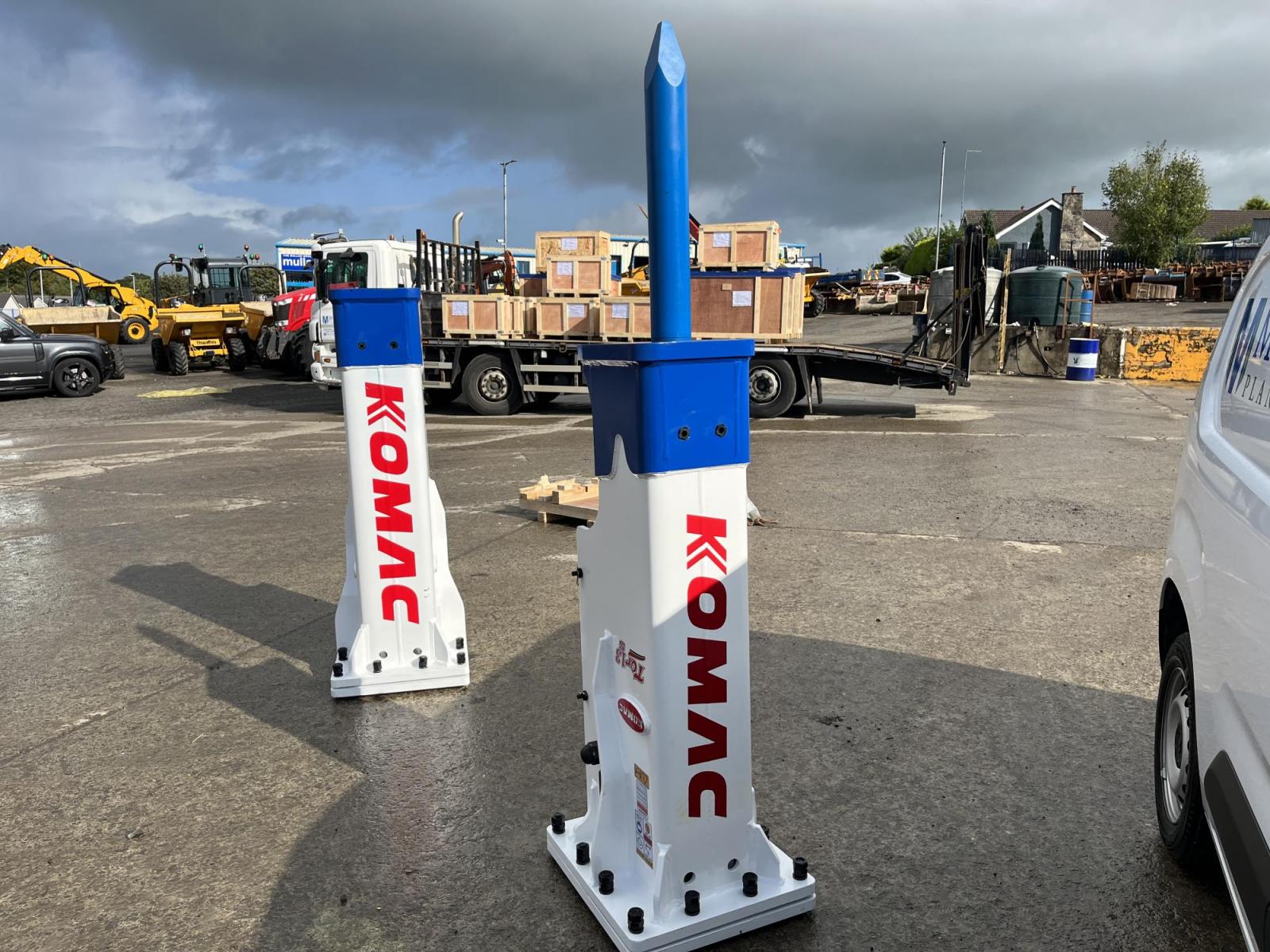
A hydraulic breaker, also called a hydraulic hammer, rock breaker or pecker, uses oil from the excavator to drive a piston that strikes a steel tool many times a minute. The tool, usually a moil point, chisel or blunt, passes the blows into the material and cracks it. They are used for breaking out slabs and foundations, trenching through rock, removing tarmac and quarry work.
Breakers come in sizes to suit everything from micro diggers to 20 tonne and larger machines.
How to choose a hydraulic breaker for your excavator
Every hydraulic breaker is built for a carrier weight range. Fitting one that is too heavy makes the machine unstable and strains the boom. Fitting one that is too light means it can be overpowered and wear quickly. Before you buy, check:
- Carrier weight: find the maker’s recommended excavator weight range for the model and make sure your machine sits inside it.
- Oil flow and pressure: compare your excavator’s auxiliary flow and relief pressure with the breaker’s specification. Too much flow or pressure can damage it; too little and it will hit weakly.
- Hammer circuit: the machine needs an auxiliary circuit suitable for a breaker, ideally with a free return to tank. If it has no hammer lines, budget for having pipework fitted.
- Mounting: check the top bracket matches your quick hitch or the pin diameter, pin centres and dipper width of your machine.
- Type of work: a moil point suits general breaking and trenching, a chisel suits cutting and trimming, and a blunt tool suits boulders and secondary breaking.
- Noise: box type or silenced breakers are quieter for built up areas.
If you are still choosing the machine itself, browse used excavators, mini excavators and backhoe loaders, and ask the seller whether the machine already has hammer pipework.
What to check on a used hydraulic breaker
A used hydraulic breaker can be good value, but it wears quickly if misused. Ask to see it fitted and running, and check the following.
Tool and tool bushes
Look at the working tool for cracks, mushrooming or a badly worn tip. Then check for play between the tool and the lower bush by moving the tool side to side. Excessive play means the bushes are worn and the piston can strike unevenly, which leads to bigger repair bills.
Retaining pins and front head
Check the tool retaining pins for wear, grooves or damage, and look at the front head for cracks.
Housing, bracket and welds
Inspect the housing, side plates and top bracket for cracks, fresh welds or repair plates. Check the through bolts are present and tight.
Hoses, fittings and seals
Look for oil leaks around the hoses, fittings and the cylinder. A breaker leaking oil from the front head often needs a seal kit. Ask when it was last sealed or serviced and whether there is a service record.
Running test
With the breaker running on a solid surface, listen for a steady, even blow rate. Weak or irregular hitting can point to low gas charge, worn internal parts or a flow problem on the machine. If the breaker has an accumulator or gas charge, ask when it was last checked.
Looking after a hydraulic breaker
Most early breaker failures come down to how it is used and greased. Grease the tool to the maker’s interval with the right chisel paste, as a dry tool wears the bushes fast. Avoid blank firing, which is running the breaker when the tool is not pressed against the material. Do not use the breaker or tool as a lever or to drag material around, and move to a new spot if the material will not break after a short burst.
For other excavator wear and replacement parts, see our guides to excavator buckets and the excavator final drive, and for mini digger tracks visit Cheapest Rubber Tracks.
Hydraulic breakers for sale on Plant And Tractor Trader
Dealers across the UK and Ireland list breakers in our rock breakers and attachments sections, with spares in excavator parts. Recent listings include a Komac TOR13S for 13 tonne machines, a Komac KB350SN for 8 tonne machines, a Komac KB200SN for 3 tonne machines, a 2022 Socomec DMS95, a JCB HM266Q breaker, a rock hammer for a 20 ton digger on 80 mm pins and a selection of hydraulic breakers.
Cannot see the right size? Set up stock alerts to hear when new breakers are listed, or post a wanted request.
Selling breakers, attachments or plant?
Dealers can list all their stock on our unlimited listings plan for £100 + VAT a month, or you can book a single 8-week listing for £150 + VAT. If your business needs a website that shows your stock properly, our dealer websites start from £750 + VAT, with hosting free for the first year and £225 + VAT a year from year two.
Frequently asked questions
What size hydraulic breaker do I need for my excavator?
Choose a breaker whose recommended carrier weight range includes your excavator’s operating weight. Then check that your machine’s auxiliary oil flow and pressure, and its hitch or pin size, match the breaker’s specification.
Does my excavator need hammer lines to run a breaker?
Yes, a breaker needs an auxiliary hydraulic circuit to supply and return oil. Many excavators come with hammer pipework fitted, but if yours does not, it will need to be added before the breaker can be used.
How often should a hydraulic breaker be greased?
Follow the interval in the maker’s manual, as it varies between models and how hard the breaker is working. Use chisel paste rather than ordinary grease, and grease with the tool pressed into the housing so the paste reaches the bushes.
Talk to Plant And Tractor Trader
Looking for a hydraulic breaker, or want your attachments in front of UK and Irish buyers? Message us on WhatsApp on 07470 093663 and we will help you find it or get it listed.