Buying a Used Telehandler: What to Check Before You Pay
A telehandler is one of the hardest working machines on a farm or building site, which is exactly why a used one needs a careful look before you buy. A good machine can give years of service. A tired one can cost you a fortune in pins, rams and downtime. This guide walks through what to check on a used telehandler, from the boom to the paperwork, so you can buy with confidence.
Start with the right machine for the job
Before you look at condition, be clear about what you need. Telehandlers vary a lot in lift capacity and lift height, and the right one depends on what you handle every day.
- Agricultural telehandlers are usually set up for bales, feed, muck and loading trailers. Look for good reach at low heights, a strong hydraulic flow for buckets and grabs, and a pick-up hitch if you will tow.
- Construction telehandlers are often taller machines for lifting materials to height on site. Stability, outriggers on larger models and a clear load chart matter more here.
- Compact telehandlers suit yards, sheds and tight sites where a full size machine will not fit.
Check the machine’s rated capacity and maximum lift height against your heaviest regular lift, and remember that capacity drops as the boom extends. The load chart in the cab tells you what the machine can safely handle at each reach.
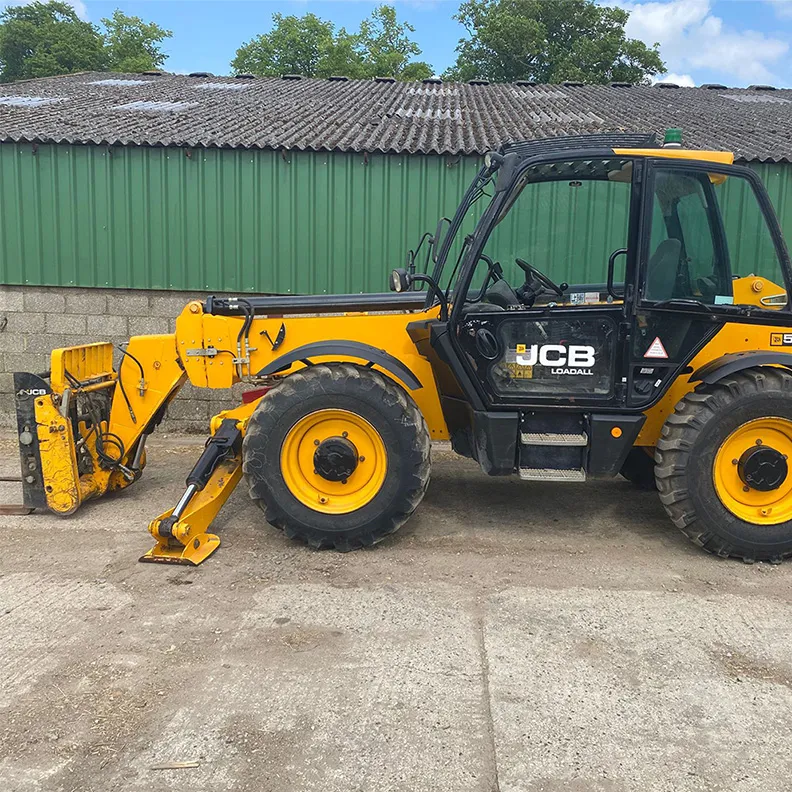
Check the boom first
The boom takes the most punishment, so spend time here.
- Wear pads: extend the boom fully and look at the pads between the sections. Heavily worn pads let the boom sag and twist. They are replaceable, but they tell you how hard the machine has worked.
- Welds and cracks: look closely along the boom, around the pivot point and at the carriage end. Fresh paint over one area can hide repairs, so ask about it.
- Straightness: sight down the boom from behind the machine. A bent or twisted boom is a serious problem.
- Extension: run the boom in and out several times. It should move smoothly without juddering or creeping back when held.
Pins, bushes and hydraulics
Play in the pins and bushes is one of the most common faults on older telehandlers. With the forks or bucket on the ground, have someone gently operate the controls while you watch the boom pivot, the carriage and the tilt ram. Any visible clunk or movement before the boom moves points to wear.
Then look at the hydraulics:
- Check every ram for oil on the chrome or around the seals.
- Look at the hoses for cracking, chafing and weeping joints.
- Lift a load to height and leave it for a few minutes. If it drops on its own, the rams or valves may need attention.
- Test the auxiliary hydraulics if you plan to run a grab, sweeper or bucket.
Engine, transmission and axles
Start the machine from cold if you can. Listen for knocks, watch for heavy smoke and check how quickly it settles. Look for oil leaks around the engine and check the coolant for oil contamination.
Drive it forwards and backwards through the gears. The transmission should engage cleanly without slipping or delay. Test the brakes and the parking brake on a slope. Try every steering mode the machine offers, such as two wheel, four wheel and crab steer, and make sure the wheels line up properly when you switch between them.
On newer engines, ask whether the machine uses a diesel particulate filter or AdBlue, and whether there have been any warnings or faults. These systems are reliable when looked after, but repairs are not cheap.
Hours versus condition
Hours matter, but they are only part of the story. A machine with higher hours and a full service history can be a better buy than a low hour machine that has been neglected or worked hard in a quarry. Compare the hour meter with the wear on the pedals, seat, steps and pins. If they do not match, ask why.
Ask for service records, and find out what the machine has been used for. A farm telehandler on light yard work and a hire fleet machine on building sites can age very differently.
Tyres and safety systems
- Tyres: check tread depth, cuts in the sidewalls and whether all four match. A set of telehandler tyres is a real cost, so factor it in.
- Safety systems: the load moment indicator should warn you as the machine approaches its limit. Test it, and make sure the load chart in the cab is present and readable.
Paperwork: LOLER, ownership and identity
A telehandler used to lift loads at work needs a thorough examination under LOLER (the Lifting Operations and Lifting Equipment Regulations). Ask to see the most recent report and check whether any defects were noted. If the machine is used with a man basket to lift people, the examination intervals are shorter. Our guide to LOLER inspections and plant repairs explains what owners need to know.
Also check that the serial number on the chassis plate matches the paperwork, ask whether the machine is registered with a security marking scheme such as CESAR, and make sure the seller has the right to sell it. If the machine is on finance, ask for confirmation that it has been settled. Buying from an established dealer with a business address and phone number gives you more comeback if something goes wrong.
Paying for it
Many buyers spread the cost of a used telehandler. If that is you, our plain English guide to asset finance for plant and machinery covers the options. Whatever you do, never pay a deposit for a machine you have not seen or had checked, and be wary of prices that look far too good to be true.
Find a used telehandler on Plant And Tractor Trader
You can browse used telehandlers for sale from UK and Irish dealers. If you also handle pallets in a yard, have a look at our used forklifts, or for heavier loading work see our used wheel loaders.
Contact sellers directly from each listing to arrange a viewing, and use the checks above when you go. If you are buying an excavator too, our used excavator checklist works the same way.
Selling telehandlers?
If you are a dealer or a private seller with telehandlers to move, you can advertise your machinery on Plant And Tractor Trader. A one-off advert is £150, or dealers can list unlimited stock for £500 + VAT for 12 months. For a quick chat, WhatsApp us on 07470 093663.