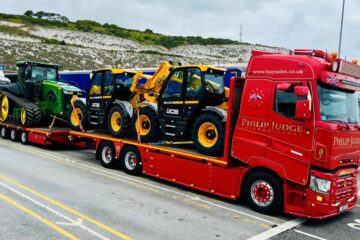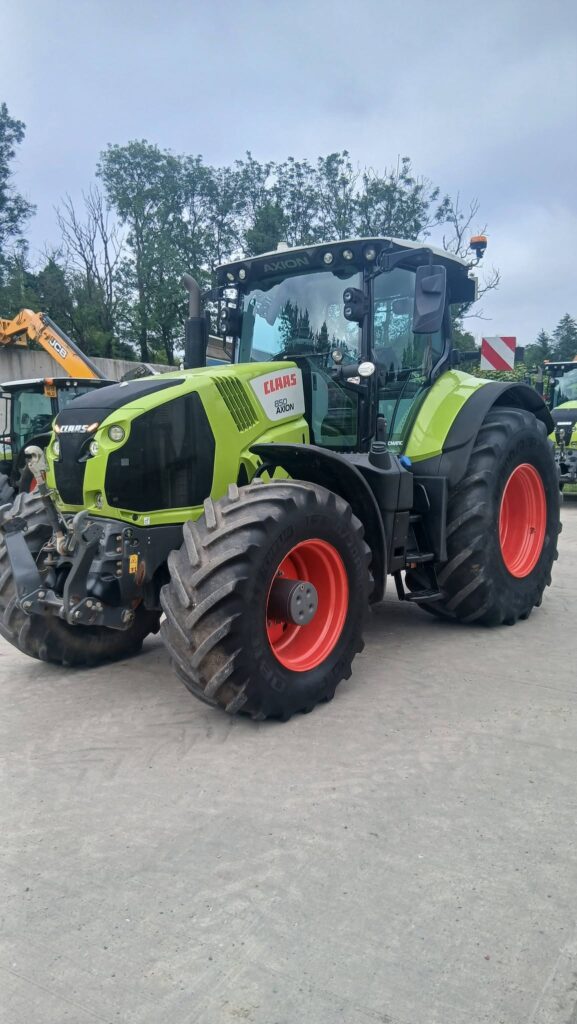
Low Loader Transport, Heavy Haulage and Back Loads: How to Move Plant Machinery Without Overpaying
Buying a machine is the easy part. Getting it home is where people come unstuck.
Every week we see machines sold on Plant And Tractor Trader that need to travel — a 13-tonne excavator going from Yorkshire to Cork, a telehandler moving between two sites, a tractor bought at auction that needs collecting by Friday. And every week, somebody pays far more than they needed to because they left the transport until the last minute.
This guide covers what you actually need to know: which trailer suits which machine, when a straightforward job turns into heavy haulage, what drives the price, and how back loads can cut the cost of a long move by a serious margin.
Looking for a haulier right now? Browse our haulage and transport directory — low loader operators, heavy haulage specialists and plant movers covering the UK and Ireland.
Low loader transport: which trailer do you need?
“Low loader” gets used as a catch-all, but the trailer matters. Put the wrong machine on the wrong trailer and you either can’t load it, can’t get under a bridge, or you’re paying for capacity you don’t need.
Beavertail and plant body
A rigid lorry or trailer with a sloping tail and ramps. The workhorse for smaller kit — mini excavators, dumpers, small telehandlers, compact tractors. Quick to load, cheap to run, and it’ll get down a farm track that a proper low loader won’t.
Typical use: machines up to roughly 10–12 tonnes, depending on the vehicle.
Step frame low loader
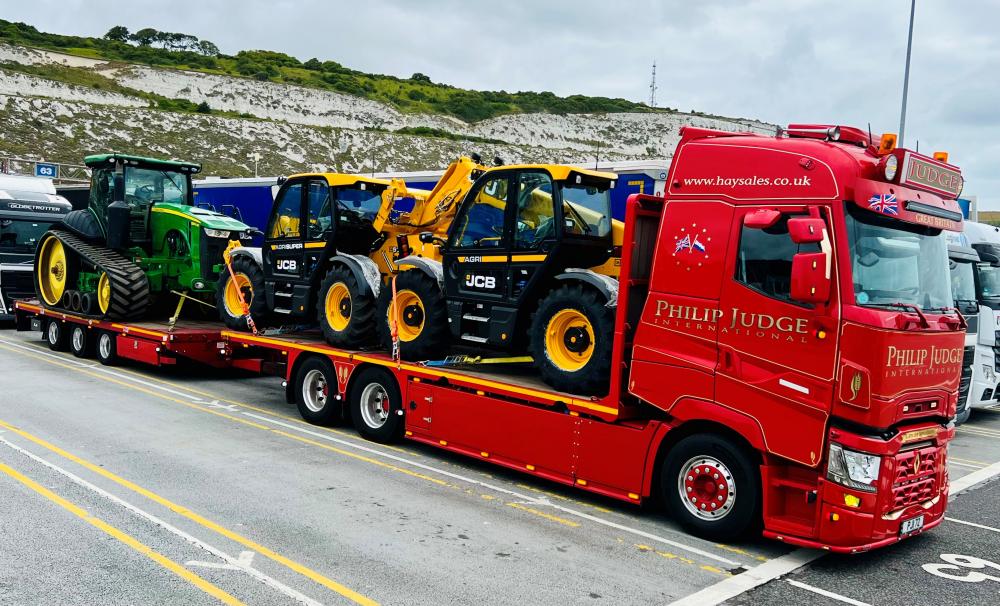
The classic. A drop in the deck height between the tractor unit and the rear axles, giving you the headroom to carry a taller machine without going over height. This is what most 13 to 30-tonne excavators travel on.
Typical use: mid-weight plant where overall travelling height is the constraint.
Semi low loader
Sits between a step frame and a flat trailer. Slightly higher deck, but easier ground clearance and better for machines that aren’t especially tall but are heavy.
Extendable (extendible) trailers
The deck extends to carry longer loads — long-reach excavators, crushers, screeners, folding equipment. Extending the trailer changes your length category, which can change what notification is needed.
Modular and multi-axle trailers
For the genuinely heavy stuff. Axles are added to spread the weight so the trailer stays inside the permitted axle loading. This is where you’re into full heavy haulage territory and route surveys.
When does it become heavy haulage?
This is the bit that catches people out, because the jump from “normal load” to “abnormal load” changes both the price and the lead time.
A standard articulated lorry in the UK operates up to 44 tonnes gross under normal Construction and Use rules. Once your loaded vehicle goes past certain thresholds, it becomes an abnormal indivisible load and a different set of rules applies.
Broadly, a load is abnormal once the loaded vehicle exceeds:
- 44,000kg gross vehicle weight
- 3 metres in width, including any projections
- 18.75 metres rigid length
- 12,000kg per axle in the case of mobile cranes
Abnormal loads move under the Special Types General Order, usually shortened to STGO, which sorts them into three weight categories:
| Category | Maximum gross weight |
|---|---|
| STGO Category 1 | 50,000kg |
| STGO Category 2 | 80,000kg |
| STGO Category 3 | 150,000kg |
Beyond 150,000kg — or for exceptional widths and lengths — the haulier needs a Special Order from the highway authority, and that can take weeks rather than days.
Notification and lead time
The haulier is responsible for notifying the police and, depending on the move, the highway and bridge authorities along the route. Routes are planned and notifications submitted through the ESDAL system (Electronic Service Delivery for Abnormal Loads), which identifies who needs telling.
Notice periods are counted in clear working days, and that phrase matters — weekends and bank holidays don’t count. A move needing two clear working days’ notice, requested on a Friday afternoon, isn’t going Monday.
As a rough guide:
- Simpler moves: around two clear working days’ notice to the police
- Heavier moves (over 80,000kg): longer notice to highway and bridge authorities, typically five clear working days
- Special Order territory: several weeks, sometimes considerably more, because of route surveys and bridge assessments
The practical takeaway: if your machine is genuinely abnormal, ring the haulier when you agree the sale, not when you’ve got the keys. Rules and thresholds do get updated, so a good operator will confirm the current position for your specific load — and it’s their job to get the notifications right.
What actually drives the price
Plant transport quotes vary far more than people expect for the same journey. Here’s what sits behind the number.
Distance, but not the way you think. You’re not paying for the miles from A to B. You’re paying for the vehicle’s whole day — getting to you, loading, running, unloading, and getting home or on to the next job. A 100-mile move can cost the same as a 200-mile one if the return leg is empty either way.
The empty leg. This is the single biggest variable, and it’s why back loads matter so much. More on that below.
Weight and category. Once you cross into STGO, you’re paying for a heavier outfit, more axles, notification admin and sometimes escorts or attendants.
Access at both ends. A hard yard with room to swing is one price. A farm gateway on a bend, soft ground, or a site where the machine has to be tracked 200 yards to reach the trailer is another. Tell the haulier the truth about access — a driver who arrives and can’t load still has to be paid.
Timing. “Any day next week” is cheaper than “Tuesday morning”. Flexibility is worth real money on a transport quote.
Waiting time. If your machine isn’t ready, isn’t accessible, or nobody’s there with the keys, the clock runs.
Back loads: the cheapest miles in haulage
A back load — also called a return load — is freight carried on the return leg of a journey the lorry was making anyway.
Here’s the economics. A haulier takes a machine from Glasgow to Bristol. That’s a paid load. But unless he finds something going back north, he drives 400 miles home empty, burning fuel and driver hours for nothing. That empty running is baked into every quote he gives.
If you’ve got a machine that needs moving Bristol to Glasgow and your timing is flexible, you’re not asking him to make a journey — you’re filling a journey he’s already making. That’s why back load rates can be dramatically cheaper than a dedicated move.
How to actually get one
Be flexible on dates. This is the whole trick. Back loads exist because a lorry is already going that way on a particular day. “Sometime in the next fortnight” gets you a back load. “Thursday, before noon” gets you a dedicated price.
Ask directly. Plenty of buyers never think to ask. When you ring for a quote, say: “I’m not in a rush — is it worth waiting for a back load?” Most hauliers will tell you straight, because a paid return beats an empty one for them too.
Book the machine, not the day. Give the haulier a window and let him slot you in.
Think about the direction of trade. Machinery flows in patterns — plant heading to ports for export, agricultural kit moving north and west. If your move runs against a busy direction, there’s a good chance of an empty lorry coming back your way.
Talk to hauliers near the machine, not near you. An operator based close to the collection point is more likely to have something already running your way.
The trade-off
Back loads mean giving up control of the date. If you’ve got a contract starting Monday and the machine has to be on site, pay for a dedicated move and don’t lose sleep over it. Back loads are for when time is worth less to you than money.
Getting your machine ready for collection
Half the delays on plant transport are avoidable. Before the lorry arrives:
- Make sure it starts and moves. If it doesn’t, say so when booking — a non-runner needs winching and that changes the vehicle required.
- Check the travelling height. Fold or remove anything that adds height. Cabs, beacons, exhausts and aerials all count.
- Take the bucket off if it makes the machine shorter or lighter, and make sure loose attachments are ready to travel.
- Drop the boom and secure everything that swings.
- Have somewhere the lorry can actually get to. Hard standing, room to turn, no low branches or narrow gates.
- Be there, with the keys. Or arrange for somebody who is.
- Photograph the machine before it loads. Both parties benefit if there’s ever a dispute about damage.
- Check it’s clean — soil on tracks matters for biosecurity, and it matters more if the machine is crossing to Ireland or going for export.
Questions worth asking before you book
- Are you O-licence holders, and is the vehicle right for this machine’s weight and dimensions?
- What goods in transit insurance do you carry, and what’s the limit? Check it covers the value of your machine, not just a standard cap.
- Have you moved this type of machine before?
- Who handles notification if this turns out to be an abnormal load?
- What happens if the machine can’t be loaded on the day, and what’s the charge?
- Is the price all in — including waiting time, ferries, escorts and any tolls?
A haulier who answers those quickly and without irritation is usually the one to use.
Find a haulier on Plant And Tractor Trader
We list low loader operators, heavy haulage specialists, plant movers and agricultural transport firms across the UK and Ireland — including hauliers who cover the Irish Sea crossing and arrange export.
Browse the haulage and transport directory →
Every listing carries direct contact details, so you’re speaking to the operator rather than a broker taking a cut.
Buying rather than moving? Have a look at machines currently for sale or find a supplier in the dealer directory.
Run a haulage business? A profile page puts you in front of buyers and sellers at the exact moment they need a machine moved — which is precisely when they go looking for transport. Find out about advertising with us.
Frequently asked questions
What’s the difference between a low loader and heavy haulage? A low loader is a type of trailer. Heavy haulage describes the job — moving loads beyond normal weight or dimension limits, which requires specialist vehicles, notification to the authorities and sometimes escorts.
How much does it cost to transport an excavator? It depends on weight, distance, access at both ends and how flexible your dates are. The biggest single factor is whether the lorry has a load for the return leg. Always ask whether a back load is possible.
What is a back load? Freight carried on the return leg of a journey a lorry is already making. Because the vehicle would otherwise run empty, back load rates are usually significantly cheaper — the trade-off is that you have to be flexible on timing.
Do I need to notify anyone myself? No. Notification is the haulier’s responsibility. But you do need to give them accurate weights and dimensions, because their notification is only as good as the information you supply.
How far in advance should I book plant transport? For a standard machine on a beavertail or step frame, a few days is usually enough. For anything abnormal, allow at least a week, and considerably longer if a Special Order is likely. Book when you agree the sale, not when you collect.
Can machines be moved to and from Ireland? Yes. A number of hauliers in our directory run regularly across the Irish Sea and handle the ferry booking as part of the job. Machines should be clean before travelling.
Plant And Tractor Trader is the UK and Ireland marketplace for plant, machinery, agricultural equipment and commercial vehicles. Regulations and notification thresholds are summarised here as a general guide and can change — your haulier will confirm the current position for your specific load.