Buying a Used Wood Chipper: What to Check Before You Buy
Buying a used wood chipper comes down to four things: the right size and drive type for your work, sharp blades and a sound anvil, a feed system and safety stop that work every time, and a road-legal chassis if it is towed. Check those before you talk price and you will avoid most of the expensive surprises. This guide walks through what to look at on a used chipper, whether it is a small petrol machine, a road-tow unit, a tractor PTO chipper or a tracked model.
Start with the size and type you actually need
Chippers are usually described by the largest branch diameter they will take, often given in inches (a 6 inch chipper, for example). Buy for the material you handle most days. An oversized machine costs more to buy, tow and run, while an undersized one slows you down and wears faster.
The main types you will see for sale in the UK are:
- Small petrol chippers for gardens, estates and light hedge work.
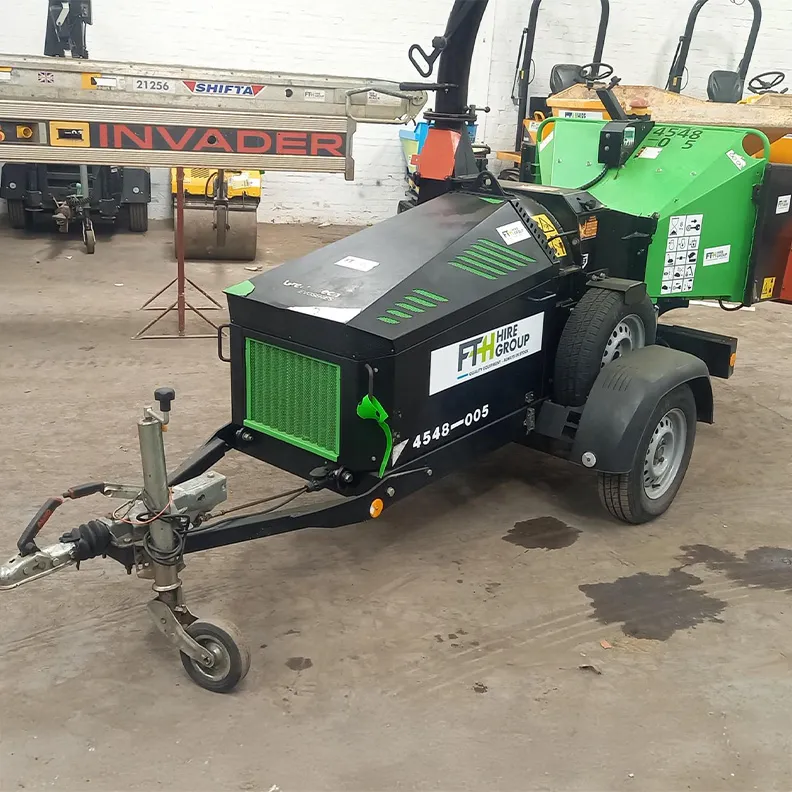
- Road-tow chippers on a braked or unbraked chassis, the usual choice for tree surgeons and hire fleets.
- Tractor PTO chippers on the three-point linkage, popular on farms and estates that already run a tractor.
- Tracked or self-propelled chippers for gardens, slopes and sites where a towed unit cannot reach.
You can compare current stock on our used chippers and wood chippers pages.
What to check when buying a used wood chipper
Always ask to see the machine start from cold and run under load. A warmed-up engine can hide starting and smoke problems.
Blades, anvil and the chipping chamber
The blades (knives) and the anvil they cut against do the real work. Ask the seller to open the chamber with the engine off and the key removed. Look for chipped, rounded or heavily reground blades, cracks around the blade mounting bolts, and a worn or rounded anvil edge. Check the disc or drum for cracks and damage from stones or metal. Ask when the blades were last sharpened or changed.
Feed rollers and feed control
Most chippers pull material in with hydraulic feed rollers. Check the roller teeth for wear, make sure the rollers turn smoothly both forwards and in reverse, and look for oil leaks around the motors and hoses. Many modern chippers have an automatic feed control that pauses the rollers when engine speed drops, so the machine does not stall. Feed some brash through and watch that it stops and restarts as it should.
Safety bar and emergency stops
This is the most important check of all. Test the bottom or side safety bar around the infeed and every emergency stop on the machine. The rollers should stop straight away each time. If any stop is slow, sticky or has been bypassed, walk away or make the price reflect a proper repair. HSE publishes guidance on the safe use of wood chippers, and anyone operating one should be trained.
Engine, clutch and belts
Check the hour meter and compare it against the service history. Listen for knocks and look for blue or heavy black smoke. On belt-driven machines, look for cracked, glazed or loose belts, and check that the clutch engages smoothly without slipping. On PTO chippers, check the PTO shaft, guards and gearbox for play and leaks.
Chute, frame and bearings
Make sure the discharge chute turns and locks, and the deflector moves freely. Check the frame and hopper for cracks or welded repairs. Spin the main shaft by hand (engine off) and listen for rough or noisy bearings, a common wear point on chippers that have done a lot of hours.
Road-tow chippers: check the chassis too
A towed chipper is also a trailer, so check it like one. Look at the tyres, wheel bearings, lights, coupling head, breakaway cable and jockey wheel. On braked units, test that the overrun brakes and handbrake actually work. Check the chassis plate and serial number match the paperwork. Make sure your driving licence and tow vehicle are suitable for the combined weight before you collect it.
Paperwork and history
Ask for service records, proof of ownership and a receipt with the serial number on it. Ex-hire machines are common and are usually serviced on a schedule, but they can have high hours, so check both.
Hire or buy?
If you only need a chipper a few days a year, hiring may make more sense. If you are chipping most weeks, a good used machine saves booking around hire availability. The safety checks above apply to hire machines too.
Frequently asked questions
What size wood chipper do I need?
Choose a chipper rated for the branch size you handle most often, not the largest you might meet occasionally. Small petrol units suit garden and light estate work, while tree surgeons usually need a road-tow machine. If in doubt, ask the seller what the machine was used for day to day.
Is a tractor PTO chipper a good buy?
A PTO chipper can be good value if you already have a suitable tractor, as there is no separate engine to maintain. It is less flexible than a road-tow chipper because it needs the tractor every time. Check the tractor’s PTO speed and linkage category match the chipper before you buy.
What are the warning signs on a used chipper?
Walk away from a machine with a safety bar or emergency stop that does not work, or one that has been bypassed. Cracks in the disc, drum or frame, heavy oil leaks and slipping clutches are also costly to put right. A seller who will not start the machine from cold is another warning sign.
Find a used wood chipper on Plant And Tractor Trader
Recent examples on the site include a 2020 GreenMech EVO165D 6 inch chipper, a 2020 Forst TR6D, a 2024 Eliet Prof 6 self-propelled chipper shredder and a GreenMech CS100. You can also browse toppers and mowers, attachments and trailers, or sign up for stock alerts to hear when new chippers are listed.
Selling a chipper or forestry machinery?
Dealers and hire companies can advertise on Plant And Tractor Trader to reach UK and Irish buyers. Our unlimited listings plan is £100 + VAT a month, or you can book a single listing for 8 weeks at £150 + VAT.
Need help finding the right chipper?
Tell us what you are chipping and how you will move the machine, and we will help you find a suitable one. Send us a message on WhatsApp on 07470 093663.