Asset Finance for Plant, Machinery and Trucks: A Plain English Guide
Very few machines in this trade are bought outright with cash sitting in the bank. A £90,000 excavator, a £70,000 tractor, a £110,000 tractor unit — most of these move on some form of asset finance, and the structure you choose has a real effect on your cash flow, your tax position and what you own at the end of it.
This is a general guide to how it works. It is not financial advice, and every business is different. When it comes to your actual deal, talk to a specialist broker who knows this trade, and talk to your accountant about the tax side.
What Asset Finance Actually Is
Asset finance is borrowing where the machine itself is the security. Rather than putting up your house or a general business loan against your balance sheet, the lender takes an interest in the asset being financed.
That has two practical consequences.
It is usually easier to get than unsecured lending. The lender has something tangible with a known resale value behind the debt, which changes their risk considerably.
The asset matters as much as the borrower. A lender will look hard at what you are buying, how old it is, what it will be worth in three years and how easily it could be sold if things went wrong. This catches people out. A perfectly creditworthy business can struggle to finance a twenty-year-old machine, and a newer business can sometimes finance a nearly-new one without much difficulty.
The Main Types of Asset Finance
The terminology gets used loosely, including by people who ought to know better. Here is what the arrangements actually are.
Hire Purchase
You pay a deposit, then fixed instalments over an agreed term. You have use of the machine throughout, and ownership transfers to you when the final payment is made.
- Suits: anything you intend to keep and work for years. The bulk of plant and agricultural machinery buying.
- Deposit: typically required, and a larger one usually improves the terms.
- Balloon payments: a larger final payment can be built in to reduce the monthly figure. Common on trucks. Be realistic about how you will meet it.
- VAT: on hire purchase, the VAT on the asset is generally payable at the outset rather than spread across the payments. Worth planning for, because it is a significant cash outlay on a large machine.
- Tax: as you are treated as acquiring the asset, capital allowances are generally available to you. Speak to your accountant about your own position.
Finance Lease
The lender owns the machine and you rent it for a primary period, generally covering most of its useful working life. At the end there are usually options: continue at a nominal rental, or sell the machine to a third party with the proceeds largely rebated to you.
- Suits: businesses wanting lower upfront cost, and those wanting the VAT spread rather than paid up front.
- VAT: generally charged on each rental rather than on the full asset value at the start. This is the main practical attraction for a lot of businesses.
- Ownership: you do not own it. If ownership at the end matters to you, hire purchase is the more natural fit.
Operating Lease and Contract Hire
You rent the machine for a set period and hand it back at the end. The lender carries the residual value risk, which is why payments are typically lower than hire purchase for the same asset.
- Suits: trucks and commercial vehicles particularly, and any operation that renews on a cycle rather than running machines into the ground.
- Often includes: maintenance packages, so the monthly figure covers more than just finance.
- Watch: hours or mileage limits, and condition on return. Both can produce a bill you were not expecting.
Refinance and Capital Release
If you already own machines outright, you can raise cash against them. Sometimes called sale and hire purchase back, or capital release.
- Suits: businesses with equity tied up in plant that need working capital, or a deposit for something else.
- Useful for: funding growth, easing a cash flow pinch, or consolidating.
- Worth noting: you are converting an owned asset into a financed one. That is a reasonable trade for the right reason and an expensive one for the wrong reason.
Asset Finance for Machinery
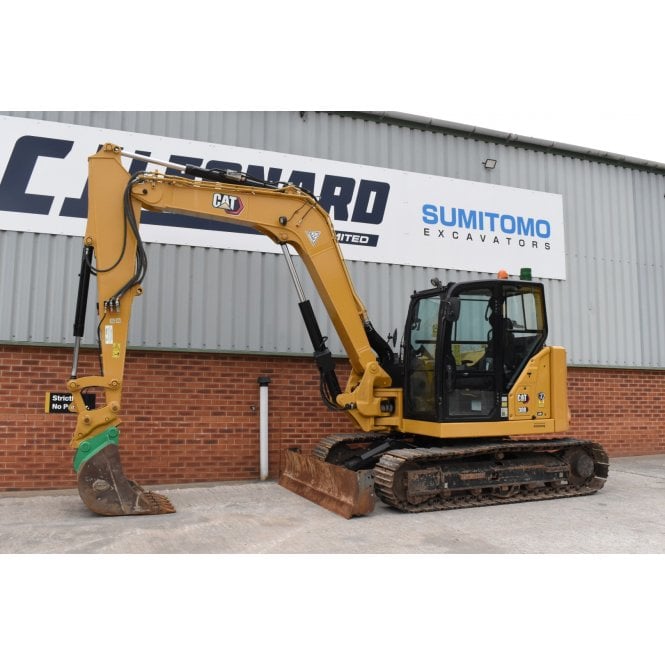
Asset finance machinery deals — excavators, tractors, telehandlers, loaders, attachments, agricultural and construction plant — have a few characteristics of their own.
Resale value is well understood. Plant and agricultural machinery holds value predictably and there is a deep, liquid used market including strong export demand. Lenders like this, and it generally means better terms than for assets that are hard to move.
Age limits apply, and they bite. Many lenders work to a maximum asset age at the end of the agreement, not the start. A fifteen-year-old machine on a five-year term means a twenty-year-old asset at the finish, and that can put it outside a lender’s appetite regardless of how good the machine is. Specialist brokers in this sector will know which lenders go further on age.
Hours and condition matter. A well-documented service history genuinely helps. It is not just about the sale price.
Seasonality can be accommodated. Agricultural cash flow is not level across the year, and some lenders will structure payments around harvest or subsidy timing. You have to ask. It rarely gets offered.
Dealer sale versus private sale. Buying through a dealer is usually more straightforward to finance than a private purchase. Private sales are financeable but expect more scrutiny and more paperwork.
Asset Finance for Trucks
Asset finance trucks deals — tractor units, rigids, tippers, trailers, vans — behave a little differently again.
Depreciation is steeper and better documented. Lenders have very good data on commercial vehicle values, so structures tend to be tighter and residual assumptions more precise.
Balloon payments are common, and so are contract hire arrangements bundled with maintenance. For an operator running a cycle rather than running vehicles into the ground, the bundled approach often works out better than it looks.
Emissions standards affect residuals. Low emission zones and clean air zones have a real effect on what a vehicle is worth at the end of the term, and lenders price for it. It is worth understanding how that affects any balloon or residual figure you are being quoted.
Operator licence and compliance. Lenders financing vehicles for a haulage operation will generally want to see that the operation is properly licensed and compliant.
Trailers and rigids are financeable separately from units, and it can be worth structuring them separately rather than as one package.
What Lenders Look At
Being prepared shortens the process considerably.
On the business: how long you have traded, filed accounts or management figures, bank statements, the state of your current commitments and how you have handled them.
On the directors or owners: personal credit history, and depending on the deal, whether personal guarantees are required. Ask about this early rather than discovering it at signing.
On the asset: what it is, its age, hours or mileage, condition, who you are buying it from, and the invoice.
On the deal: deposit available, term wanted, and whether the payments genuinely work against your cash flow.
Newer businesses are not shut out, but expect a larger deposit or a shorter term. Adverse credit does not automatically end the conversation either — some lenders specialise in exactly that, which is one of the better arguments for going through a broker rather than straight to a single funder.
Broker or Direct?
Both work. The difference is worth understanding.
Going direct to your bank or a single funder is simple, and if you have a strong relationship and a straightforward deal, it can be the quickest route.
Going through a specialist broker gives you access to a panel of lenders rather than one appetite. That matters most when the deal is not textbook: an older machine, a newer business, a seasonal cash flow, a private sale, or a mixed package of assets. A broker who works in plant, agri and haulage every day also knows which funders understand these assets and which will waste a fortnight before declining.
The practical test: if your deal is ordinary and your bank is willing, direct is fine. If there is anything unusual about the asset, the timing or the business, a specialist will almost certainly find you a better answer.
Finance Specialists on Plant And Tractor Trader
We list finance and leasing specialists who work in plant, agricultural machinery, haulage and commercial vehicles specifically, rather than generalists who treat an excavator like a photocopier.
Browse all finance and leasing specialists →
Equipment Finance SW Finance specialists covering plant, trucks and machinery.
AG Credit Agricultural and haulage finance specialists.
W Beacom Financial Services Ltd Agricultural machinery finance specialists.
Approach more than one. Terms vary, appetites vary, and it costs you nothing to compare.
See the full finance and leasing category →
Found the Machine First?
Sometimes it works the other way round: you find the machine, then sort the money.
Browse machinery listings on Plant And Tractor Trader →
Plant, agricultural machinery, haulage and commercial vehicles from dealers across the UK and Ireland.
For Finance Firms and Dealers
If you are a finance broker, funder, dealer or machinery trader wanting to reach buyers who are actively in the market, we would be glad to hear from you. Around 30,000 visitors a month, 15,000 email subscribers and 35,000 Facebook followers.
Advertise with Plant And Tractor Trader →
Frequently Asked Questions
What is the difference between hire purchase and a finance lease? With hire purchase you are working towards owning the machine, and title passes to you on the final payment. With a finance lease the lender retains ownership and you rent for a primary period, with options at the end. The VAT treatment differs too: hire purchase generally means VAT on the asset up front, while a finance lease generally spreads it across the rentals.
Can I get asset finance on an older machine? Often yes, but lenders commonly apply a maximum asset age at the end of the agreement rather than the start. That is what limits the term available on an older machine. Specialist brokers know which funders have appetite for older assets.
Do I need a deposit? Usually, though the amount varies with the asset, the term and the strength of the business. A larger deposit generally improves the rate and the likelihood of approval.
Can I finance a machine bought privately? Generally yes, though expect more scrutiny than a dealer purchase, and more paperwork around ownership and condition.
Will a personal guarantee be required? It depends on the lender, the size of the deal and the strength of the business. Ask about it at the outset rather than at signing.
Is asset finance available to new businesses? Yes, though typically with a larger deposit, a shorter term or additional security. A broker with a panel of lenders is particularly useful here.
Can payments be structured around seasonal income? Some lenders will accommodate seasonal or harvest-weighted payment profiles, which suits agricultural businesses. It is rarely offered unprompted, so raise it early.
Is asset finance regulated? It depends on the structure of the borrower and the agreement. Lending to limited companies is generally outside the consumer credit regime, while sole traders and small partnerships may have protections. Ask the broker directly what protections apply to your agreement.
Important
This article is general information about how asset finance works, not financial advice, and nothing in it is a recommendation of any particular product, structure or provider. Terms, availability and tax treatment depend on your circumstances. Speak to a qualified finance professional and your accountant before entering into any agreement.